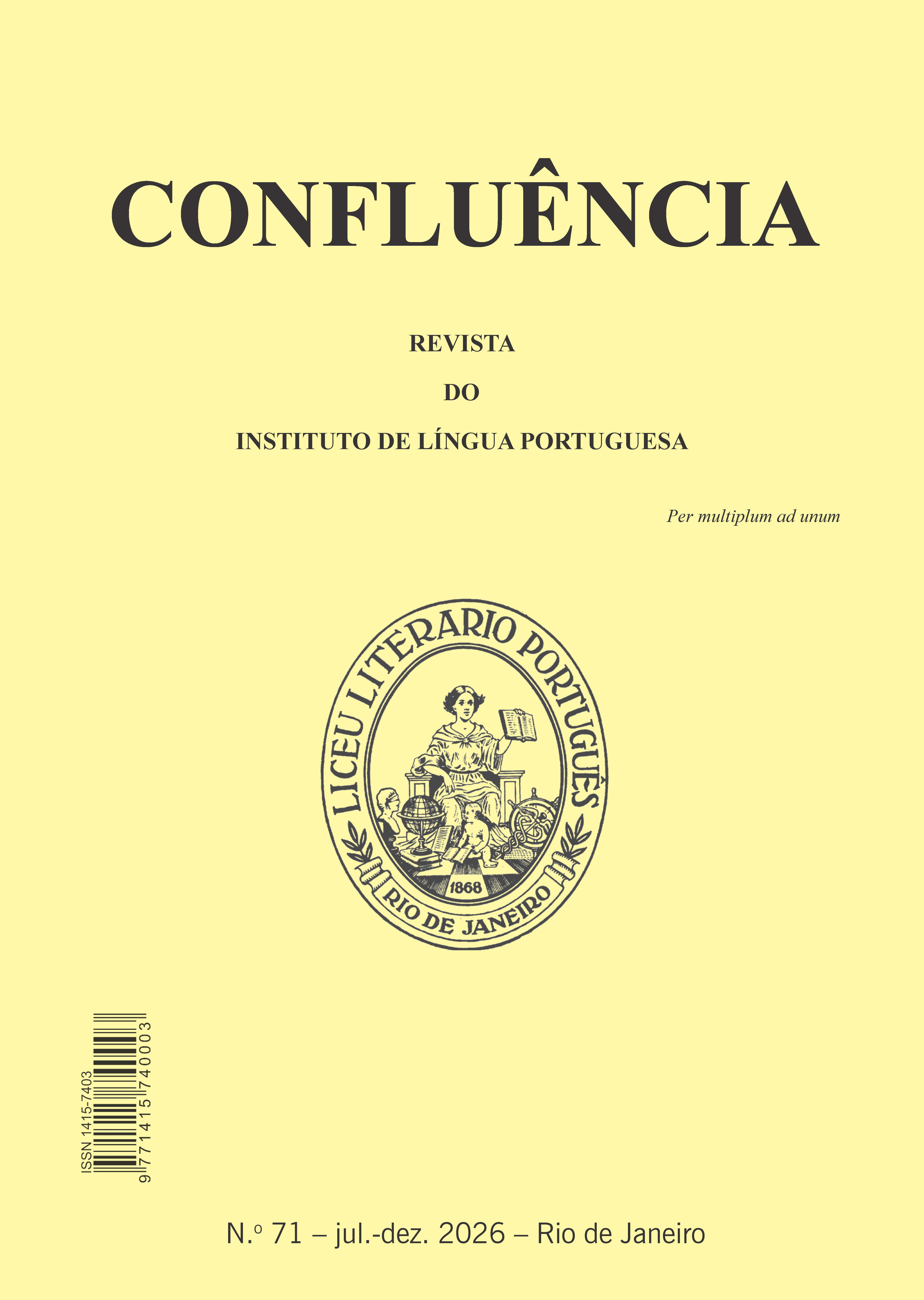
Linguistic variation in the collection “Português: Linguagens” (PNLD 2024-2027): an analysis of the sixth-grade textbook
DOI:
https://doi.org/10.18364/rc.2026n71.1517Keywords:
Sociolinguistics, Linguistic Variation, Textbook, Elementary EducationAbstract
This article, linked to Variational Sociolinguistics (Labov, 2008) and Educational Sociolinguistics (Bortoni-Ricardo, 2008; Faraco, 2008), seeks to reflect on the presence of linguistic variation in textbooks linked to the PNLD and used throughout Brazil. Our objective is to analyze how the sixth-grade textbook and the teacher’s manual, both from the collection Português: Linguagens (2022), by Cereja and Vianna, develop linguistic variation. To achieve this goal, we followed a qualitative methodological approach (Gerhardt; Silveira, 2009; Minayo, 1994), observing the selected corpus in three dimensions: (i) content, (ii) activities proposed to students, and (iii) guidelines for teachers. As for the results, it was observed that the content and activities proposed are consistent with the guidelines and proposals presented in the collection’s manual. Regarding the treatment of linguistic variation, the volume analyzed offers a promising basis for the formation of linguistic criticality, insofar as the concepts, content, and activities intended for students, when mediated by the teacher, provide good examples for reflection in the classroom.
Downloads
References
ALMEIDA, Joyce Elaine de; BORTONI-RICARDO, Stella Maris. Variação linguística na escola. São Paulo: Contexto, 2023.
ALKMIM, Tânia Maria. Sociolinguística. In: BENTES, Anna Christina; MUSSALIM, Fernanda. (Orgs.) Introdução à lingüística: domínios e fronteiras. Vol. 1. 3. ed. São Paulo: Cortez, 2003, p. 21-47.
ANTUNES, Irandé. Aula de Português: encontro & interação. São Paulo: Parábola Editorial, 2003.
BAGNO, Marcos. Preconceito lingüístico: o que é, como se faz. 15. ed. São Paulo: Loyola, 2002.
BAGNO, Marcos. Nada na língua é por acaso: por uma pedagogia da variação linguística. São Paulo: Parábola, 2007.
BEZERRA, Maria Auxiliadora. Ensino de língua portuguesa e contextos teórico-metodológicos. In: DIONÍSIO, Angela Paiva; MACHADO, Anna Rachel; BEZERRA, Maria Auxiliadora. Gêneros textuais & ensino. São Paulo: Parábola, 2010.
BONINI, Adair. Metodologias de ensino de produção textual: a perspectiva da enunciação e o papel da psicolingüística. Perspectiva, Florianópolis, v. 20, n. 1, p. 23-47, 2002.
BORTONI-RICARDO, Stella Maris. Nós cheguemu na escola, e agora? São Paulo: Parábola Editorial, 2005.
BRASIL. Ministério da Educação. Fundo Nacional de Desenvolvimento da Educação. PNLD - Histórico. Brasília, DF, 2021. Disponível em: https://www.gov.br/fnde/pt-br/acesso-a-informacao/acoes-e-programas/programas/programas-do-livro/pnld/historico. Acesso em: 07 nov. 2025.
BRASIL. Ministério da Educação. Base Nacional Comum Curricular: educação é a base. Brasília, DF, 2018.
BRASIL. Ministério da Educação. Parâmetros Curriculares Nacionais. Brasília, DF, 1998.
BUNZEN, Clecio; ROJO, Roxane. Livro didático de língua portuguesa como gênero do discurso: autoria e estilo. In: COSTA VAL, Maria da Graça Ferreira da; MARCUSCHI, Beth. (Org.). Livros didáticos de língua portuguesa: letramento, inclusão e cidadania. Belo Horizonte: Ceale; Autêntica, 2008, p. 73-117.
CEREJA, William. VIANNA, Carolina Dias. Português: linguagens [6º ano]. 11. ed. São Paulo: Saraiva Educação, 2022.
COELHO, Izete Lehmkuhl; GÖRSKI, Edair Maria; MAY, Guilherme Henrique; SOUZA, Christiane Maria Nunes de Souza. Sociolinguística. Florianópolis: LLV/CCE/ UFSC, 2010.
COELHO, Paula Maria Cobucci Ribeiro. O tratamento da variação linguística no livro didático de português. Dissertação (Mestrado em Linguística), Universidade de Brasília, Brasília, 2007. 162 p.
FARACO, Carlos Alberto. Norma Culta Brasileira: desatando alguns nós. São Paulo, SP: Parábola Editorial, 2008.
GERHARDT, Tatiana Engel; SILVEIRA, Denise Tolfo. Métodos de pesquisa. Porto Alegre: Editora da UFRGS, 2009.
GODOY, Arlinda Schmidt. Pesquisa qualitativa: tipos fundamentais. Revista de Administração de Empresas. v. 35, n. 3, p. 20-29, 1995. Disponível em: https://www.scielo.br/j/rae/a/ZX4cTGrqYfVhr7LvVyDBgdb/?lang=pt. Acesso em: 04 nov. 2025.
LABOV, William. Padrões sociolingüísticos. Tradução de Marcos Bagno, Maria Marta Pereira Scherre e Caroline Rodrigues Cardoso. São Paulo: Parábola Editorial, 2008.
LEFFA, Vilson José. Metodologia do ensino de línguas. In: BOHN, Hilário Inácio; VANDERSEN, Paulino. Tópicos em linguística aplicada: O ensino de línguas estrangeiras. Florianópolis: EDUFSC, 1988, p. 211-236.
LIMA, Ricardo Joseh. Variação linguística e os livros didáticos de português. In: MARTINS, Marco Antonio; VIEIRA, Silvia Rodrigues; TAVARES, Maria Alice (Orgs.). Ensino de português e Sociolinguística. São Paulo: Contexto, 2014.
MARCOTULIO, Leonardo Lennertz; LOPES, Célia Regina dos Santos; BASTOS, Mário Jorge da Motta; OLIVEIRA, Thiago Laurentino de. Filologia, história e língua: olhares sobre o português medieval. São Paulo: Parábola Editorial, 2018.
MARTINS, Marco Antonio; VIEIRA, Silvia Rodrigues; TAVARES, Maria Alice. Ensino de português e Sociolinguística. São Paulo: Contexto, 2014.
MINAYO, Maria Cecília de Souza. Ciência, técnica e arte: o desafio da pesquisa social. In: DESLANDES, Suely Ferreira; NETO, Otavio Cruz; GOMES, Romeu; MINAYO, Maria Cecília de Souza. (Org.). Pesquisa social: teoria, método e criatividade. Petrópolis: Vozes, 1994, p. 9–29.
MORAES, Maria Célia Rocha de; COSTA, Camylla de Barros; SILVA, Sandra Soares da; SÁ, Edimilson José de. A variação linguística no livro didático: Um olhar sob o viés da Sociolinguística. Gradus: Revista Brasileira de Laboratório, v. 8, n. 1, p. 53-76, 2023.
SOARES, M. Português na escola: história de uma disciplina curricular. In: BAGNO, Marcos (Org.). Linguística da norma. São Paulo: Loyola, 2002.
TARDELLI, Marlete Carboni. O ensino de Língua materna: interações em sala de aula. São Paulo: Cortez, 2002.
TRAVAGLIA, Luiz Carlos. Gramática e interação: uma proposta para o ensino de gramática no 1º e 2º graus. São Paulo: Cortez, 2000.
Downloads
Published
Issue
Section
License
Copyright (c) 2026 Tatiana Keller, Bruno Luiz Signori, Gabriel Eduardo Gonçalves

This work is licensed under a Creative Commons Attribution-NonCommercial 4.0 International License.
The author who publishes in this journal agrees to the following terms: The author maintains the copyright and grants the journal the right of first publication, with the work simultaneously licensed under the Creative Commons Attribution License that allows the sharing of the work with acknowledgment of the authorship and initial publication in this journal. The author is authorized to take additional contracts separately, for non-exclusive distribution of the version of the work published in this journal (eg publish in institutional repository or as a book chapter), with acknowledgment of authorship and initial publication in this journal. The author is allowed and encouraged to publish and distribute his work online (eg in institutional repositories or on their personal page) at any point before or during the editorial process, as this can generate productive changes, as well as increase the impact and citation of the published work.